


Amazon has officially notified sellers that product titles in all categories except media must be 75 characters or less — including spaces. The change takes effect July 27, 2026, and listings that don't comply may have their titles automatically rewritten by Amazon's AI without the seller's direct approval.
For sellers, brands, agencies, and aggregators managing large catalogs, this is more than a formatting update. It's a shift in how product information is structured — and it creates a new category of listing change that most teams aren't currently monitoring.
What Amazon Is Actually Changing
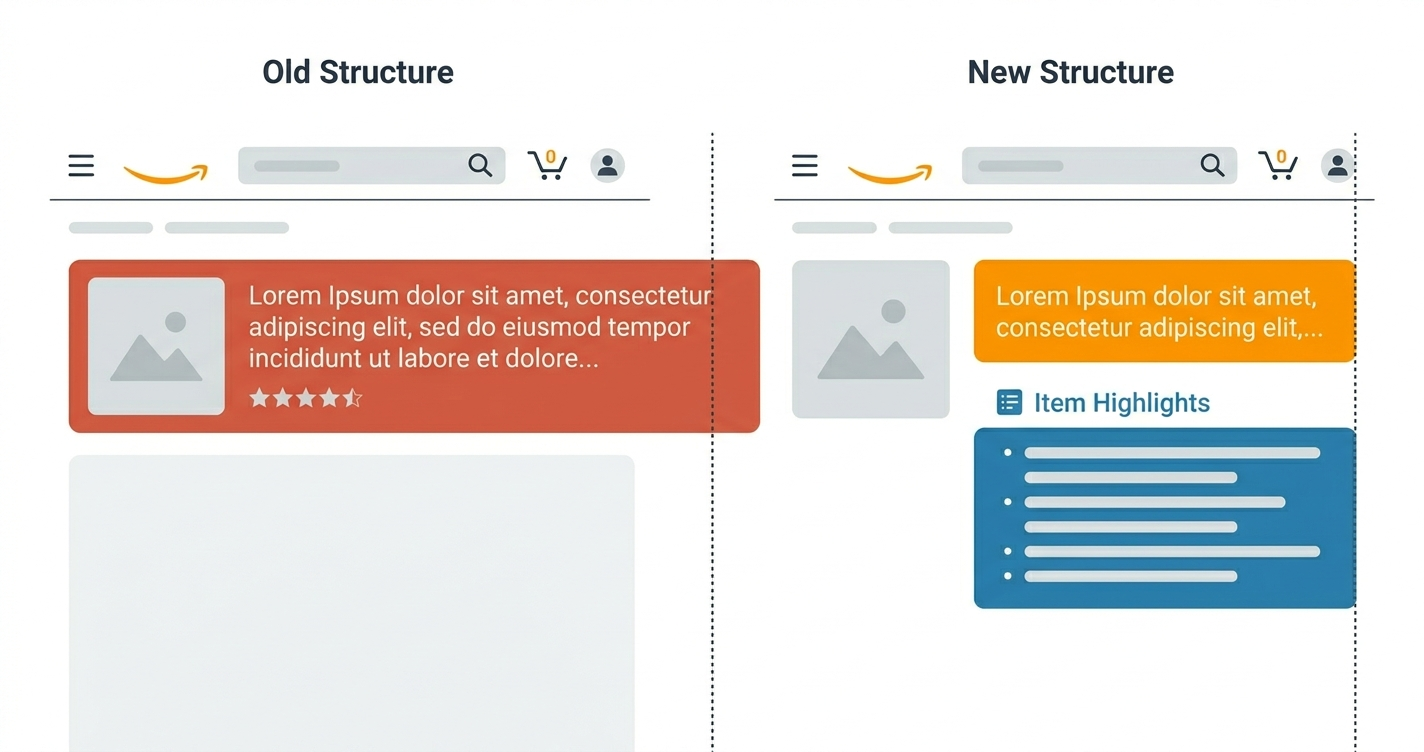
The 75-character title limit aligns Amazon with the standard used by many other online retailers and ensures product titles display in full on mobile devices. Amazon is not reducing the total amount of information sellers can surface to customers — it's redistributing where that information lives.
To accommodate the content that won't fit in a shorter title, Amazon is expanding the role of a field called Item Highlights. This section allows up to 125 additional characters and is both searchable and visible to customers in search results and on product detail pages.
In practice, listing optimization is shifting from being title-focused to being distributed across multiple content fields. Keywords, materials, use cases, and differentiating features that previously lived in a 100+ character title now need to be strategically placed across title and Item Highlights — not just truncated.
What a 75-Character Limit Looks Like in Practice
Consider a title that many sellers currently use without a second thought:
The remaining attributes move to Item Highlights. Customers still see them, and the content is still searchable. But any listing currently relying on a long title for keyword density needs to be reoptimized — not just shortened.
Who Needs to Act Before July 27
The impact of this change varies significantly depending on how you sell.
Brand owners have a 14-day window after July 27 to review, modify, and approve AI-generated title recommendations before they go live. Amazon has made this review available in the "Review Listing Changes" section of Seller Central. For brand owners with large catalogs, the priority right now is identifying which ASINs are over 75 characters and deciding whether to accept Amazon's AI recommendation or write your own compliant version.
Non-brand sellers may have less protection. Listings that exceed the limit after the deadline can be updated automatically — and sellers who aren't actively monitoring those ASINs may not notice the change until it's already affecting their search performance.
Agencies and aggregators managing listings across multiple brand accounts face a coordination challenge. A single unexpected title change on a high-revenue ASIN can affect CTR and conversion before anyone on the account team is aware it happened.
How to Use Amazon's AI Recommendations (and When to Override Them)
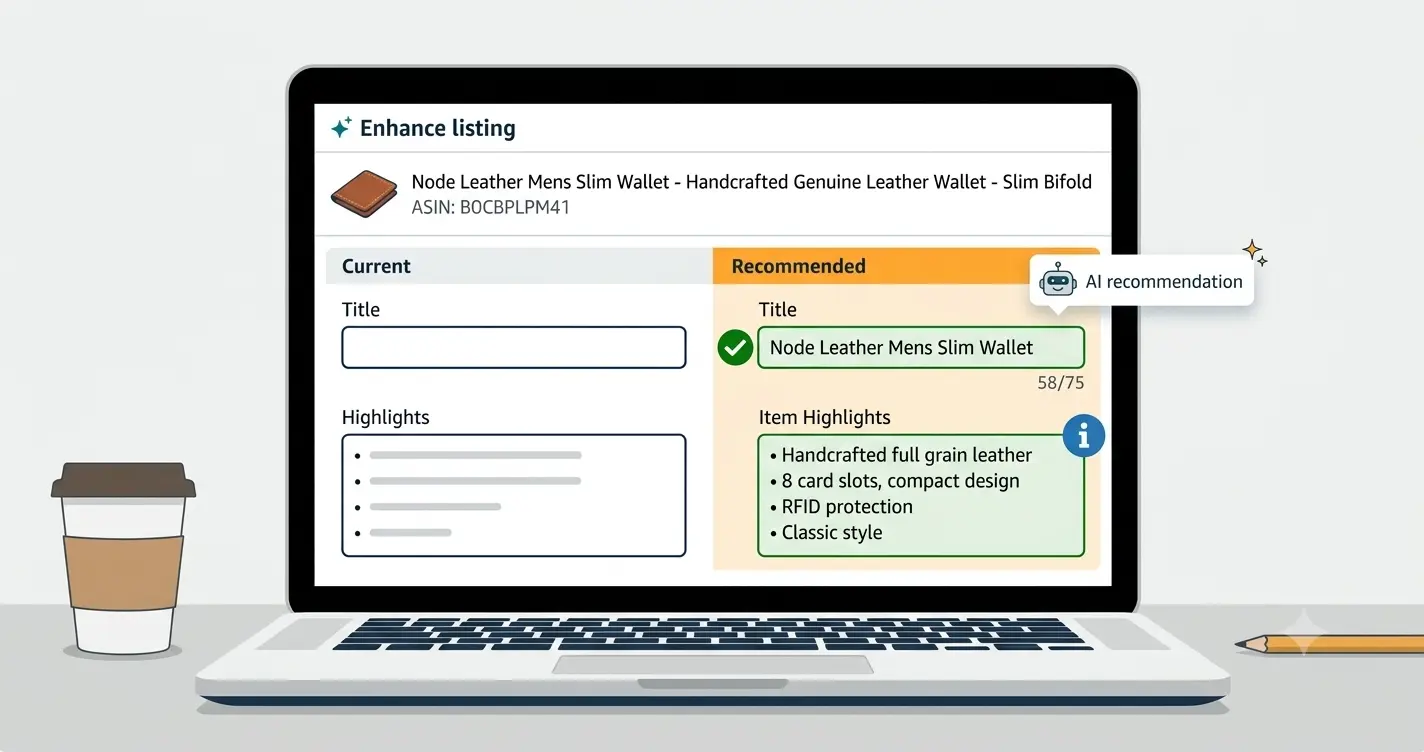
Amazon has built tooling to help sellers transition. In Manage All Inventory, selecting "Edit" on any listing and clicking "View enhancements" shows both an AI-recommended title and suggested Item Highlights content. These recommendations are available now — you don't have to wait until July 27 to review them.
The AI-generated titles are a reasonable starting point, but they aren't always optimal for search performance. Amazon's system prioritizes compliance and mobile display — it doesn't know which keywords are driving your traffic or how your title relates to your ad campaigns. Before accepting any recommendation wholesale, cross-reference it against your current search term report and make sure the highest-performing terms are preserved — either in the title or explicitly moved to Item Highlights.
The Risk No One Is Talking About: Silent Title Changes
Amazon's announcement focuses on the July 27 enforcement deadline, but the more persistent risk starts the day the policy goes live — and continues indefinitely.
Once Amazon begins applying AI-generated titles to non-compliant listings, the same infrastructure exists to update titles for other reasons: catalog quality initiatives, contribution changes on shared listings, brand registry updates, and internal merchandising decisions. Titles can and do change without direct seller action.
What changes after July 27 is the frequency and scale. A title change can affect:
- Search visibility — keyword coverage shifts if high-performing terms are removed or repositioned
- Click-through rates — different title copy, different customer response
- Conversion rates — customers arriving with different expectations based on what they saw in search
- Brand consistency — especially for brands maintaining a specific naming convention across their catalog
- Marketplace compliance — some categories have additional title requirements beyond character count
If you're not actively monitoring your titles, important changes can happen without your team noticing — and the window for correction widens the longer the change goes undetected.
How AmzMonitor Helps
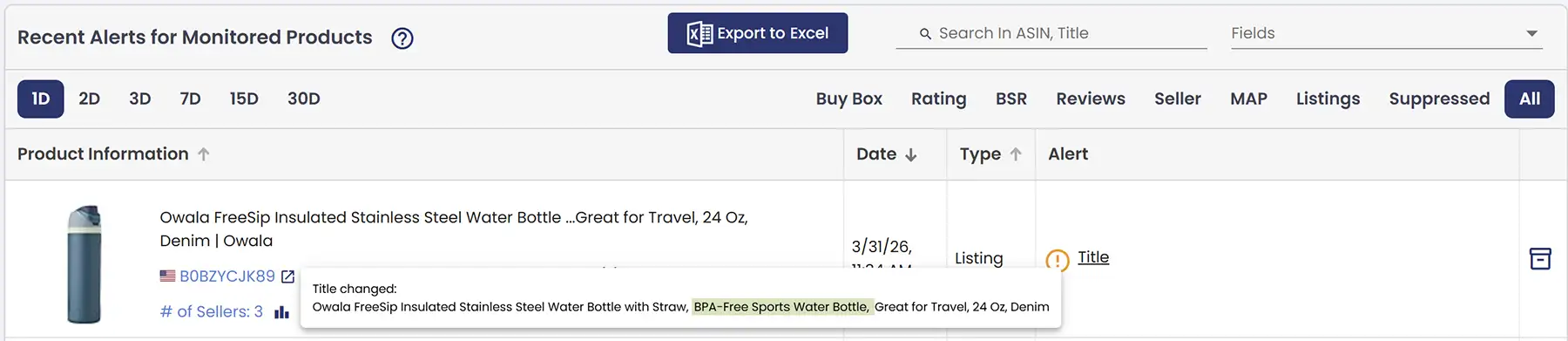
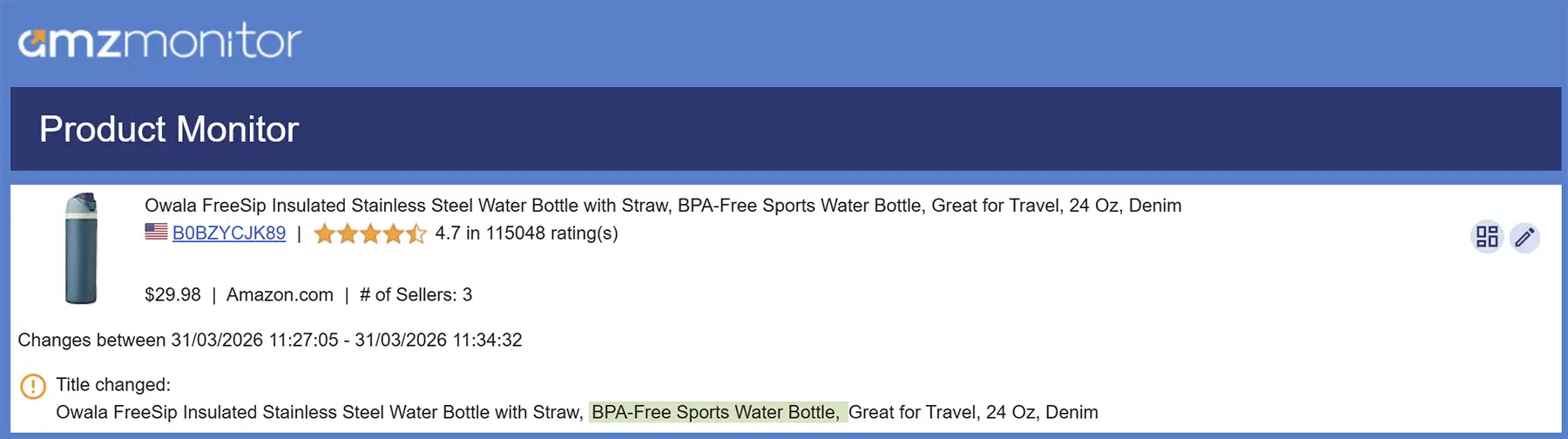
AmzMonitor continuously tracks product title changes across your monitored ASINs. The moment a title changes — whether triggered by Amazon AI, a brand owner update, a catalog contribution, or anything else — you receive an alert with the previous title, the current title, and a timestamp.
This means you can:
- Know immediately when a title has changed, rather than discovering it during a monthly audit
- Compare the previous and current versions side by side to assess the impact
- Determine whether the change was expected or unauthorized
- React quickly if the new title is underperforming or non-compliant
- Track listing optimization activity across multiple marketplaces from a single dashboard
Title monitoring has always been part of responsible catalog management. After July 27, with Amazon actively rewriting titles at scale, it becomes essential.
Item Highlights Monitoring: What's Coming
Amazon's announcement signals that Item Highlights will become a critical listing attribute going forward — not just an overflow field for content that didn't fit in the title. As Amazon expands its use and sellers begin optimizing this field more deliberately, changes to Item Highlights content will carry the same performance implications as title changes.
AmzMonitor will begin monitoring the Item Highlights field as this rollout matures. Once available, sellers will be able to detect changes, receive alerts when updates occur, compare previous and current content, and track listing activity across marketplaces — applying the same monitoring discipline to this new field that currently exists for titles.
Frequently Asked Questions
The Bottom Line
Amazon's 75-character title requirement is a real deadline with real consequences for sellers who aren't prepared. The enforcement mechanism — AI-generated title rewrites applied at scale — means non-compliant listings won't just receive a warning. They'll be changed.
The sellers best positioned for this transition are the ones who act before July 27: auditing their catalog for non-compliant titles, reviewing Amazon's AI recommendations critically, and putting monitoring in place so they know immediately when any title changes after the deadline.
The title limit is a one-time compliance task. Monitoring what happens to your titles after July 27 is an ongoing one.