

FBA storage fees have become one of the more unpredictable line items in an Amazon seller's P&L. Between monthly storage charges, long-term storage fees, and the capacity limits Amazon has been tightening since the pandemic, managing inventory flow into FBA has turned into a logistics problem in its own right — not just a fulfillment one.
Amazon Warehousing and Distribution (AWD) is Amazon's answer to that problem. It's a bulk storage and replenishment layer that sits upstream of FBA. Understanding where it fits in the chain is one thing — figuring out whether it actually makes sense for your business, and how it stacks up against what you're probably already doing with a third-party logistics provider, is another.
What Is AWD? (In Plain Terms)
AWD is Amazon's own wholesale warehousing network. You ship large quantities of inventory to an AWD facility, and Amazon holds it there at lower per-unit storage costs than standard FBA. When your FBA stock levels drop, AWD automatically replenishes them — no manual purchase orders, no carrier coordination.
The key distinction is that AWD is not a fulfillment center. Orders don't ship from AWD. Customers never interact with it. It's purely a buffer — a cheaper place to hold inventory before it's needed at an FBA fulfillment center.
Amazon launched AWD broadly in 2023 and has continued revising it since. Most recently, effective January 15, 2026, Amazon overhauled the fee structure with region-specific pricing. Rates now differ between the West Coast and the East Coast, South East, and South Central regions — so the numbers you saw in a blog post from 2024 may already be outdated.
AWD vs. FBA: What Each One Actually Does
These two systems are often conflated, but they serve completely different functions. Understanding the division of labor matters before you commit to using either differently.
FBA (Fulfillment by Amazon) is a customer-facing operation. Stock sits in fulfillment centers close to Prime customers, gets picked, packed, and shipped within the delivery windows Amazon promises. The cost of that proximity and speed is reflected in storage rates — particularly during Q4, when Amazon charges peak-season surcharges and aggressively limits how much inventory sellers can store.
AWD is a holding operation. No customer shipping. No last-mile anything. It exists to warehouse large quantities cheaply, then feed FBA on a rolling basis. FBA handles the velocity; AWD handles the volume.
The practical implication: you should be optimizing FBA inventory turns (high velocity, not overstocked), while AWD lets you buy in volume — better per-unit COGS from suppliers — without penalizing yourself with FBA's storage fees on inventory that won't move for 60–90 days.
AWD Fee Structure: What You're Actually Paying
AWD pricing has three tiers, and which one applies to a given SKU depends on how you use the system. Here's what each tier means in practice — without getting into every line-item rate, which Amazon publishes in Seller Central and updates periodically.
The Base Rate is the default. It applies when you're managing replenishment to FBA manually. No special qualification required; you just pay the standard rate for storage, inbound processing, outbound processing, and transportation. As of the January 2026 update, Base storage runs $0.57/cubic foot per month on the West Coast and $0.48/cubic foot on the East Coast and southern regions.
The Smart Storage Rate gives you a 10% discount on storage and applies automatically when two conditions are met: at least 70% of a SKU's FBA replenishment has been flowing through AWD auto-replenishment over the prior 90 days, and the SKU's combined inventory across AWD and FBA represents at least 70 days of historical demand. If both thresholds are hit, Amazon applies the discount on its own — you don't need to request it. Eligibility is assessed on the 25th of each month for the following month's charges.
The Amazon Managed Rate goes a step further — 20% off storage and a small discount on transportation — and applies when you enroll a SKU in Amazon's Supply Chain Managed Service, where Amazon takes over replenishment decisions more fully.
Beyond storage, every AWD shipment incurs inbound and outbound processing fees ($1.40/box each at Base) and a transportation fee for moving inventory from AWD to FBA. One current exception worth noting: the West Coast Palletizable region has a promotional 25% discount on inbound processing fees for qualifying shipments received through December 31, 2026.
One useful side effect of qualifying for the Smart Storage rate: several FBA fees stop applying to those SKUs. Specifically, the low-inventory-level fee, storage utilization surcharge, and FBA aged inventory surcharge for inventory stored 181–365 days are all waived as long as auto-replenishment stays above that 70% threshold. That's not a trivial benefit — those fees can quietly inflate costs on SKUs with irregular velocity.
AWD vs. a Standard 3PL: The Comparison Most Guides Skip
If you're already using a third-party logistics provider as an intermediate warehouse before FBA, you need a real comparison, not just an AWD feature list.
A traditional 3PL arrangement works like this: you import in bulk, the 3PL receives your goods, stores them, preps them for Amazon if needed (labeling, poly-bagging, bundling), and ships them to FBA when you trigger a replenishment. You're paying for storage, handling, and outbound freight — but you control the timeline, the process, and the standards.
AWD works differently. Amazon receives your inventory in bulk (more on what "bulk" means for quality control later), stores it, and replenishes FBA automatically when inventory levels hit a threshold. You're not coordinating shipping to FBA yourself — Amazon does that. And crucially, you may qualify for a placement fee exemption if you use AWD to feed your FBA inventory.
So which is better? It depends on volume, product characteristics, and what you're currently paying.
- AWD typically wins on storage cost per unit for standard-size, non-fragile, non-expiration-date-sensitive products at scale. If you're storing 5,000+ units in a 3PL at $0.50–$0.75/cubic foot per month, AWD's rates may come in lower — but you need to model your specific SKUs, not generic estimates.
- 3PL typically wins on flexibility and product control. If your products need inspection, relabeling, repackaging, or quality checks before going to Amazon, a 3PL can do all of that. AWD cannot — Amazon is not your QC department.
- AWD wins on replenishment automation for sellers who don't want to manage FBA restocking manually. The auto-replenishment is genuinely useful if your sales velocity is predictable.
- 3PL wins for products with expiration dates or lot-number tracking. AWD does not currently support FEFO (first expired, first out) at the level a specialized 3PL can.
A reasonable rule of thumb: if you're moving more than $500K/year in revenue through Amazon, have products that don't require pre-FBA prep, and want to simplify your inbound logistics, AWD is worth a serious look. Below that threshold, or with products that need touch-points before reaching FBA, your 3PL is probably doing more work than AWD can replace.
When AWD Probably Doesn't Make Sense
AWD gets pitched as a broadly useful program, but there's a real subset of sellers for whom it's not a good fit — at least not yet.
Very low volume sellers. AWD is designed around bulk inbound. If you're sending a few hundred units at a time, the inbound processing fees and transportation costs eat into whatever storage savings you'd capture. The economics improve significantly at higher volumes.
Handmade or custom products. If each unit is made to order, or if your inventory is assembled in small batches, AWD's bulk-receipt model doesn't align with your supply chain. You're not holding 60-day buffers of handmade goods.
Custom kitting operations. If you build bundles or kits after receiving components, that work needs to happen somewhere before Amazon receives the finished unit. AWD won't kit for you, and routing components through AWD only to kit them later at a 3PL defeats the purpose.
Expiration-sensitive inventory. Perishables, supplements with short shelf lives, or anything requiring strict lot rotation are poor candidates. AWD handles inventory at the case level and doesn't offer the FEFO controls you'd get from a 3PL built for regulated or date-sensitive goods.
Products that require inspection before FBA. If your supplier has inconsistent quality, or if you've ever had to deal with complaints about units that arrived damaged or mispacked, you need a checkpoint before Amazon touches your inventory. AWD is not that checkpoint. Units go from your supplier's carton to Amazon's warehouse without anyone verifying what's inside.
Does AWD Affect Your Inventory Performance Index?
This comes up often, and it's worth addressing directly because the relationship isn't always obvious.
Your IPI score is calculated based on FBA inventory metrics — excess inventory, sell-through rate, stranded inventory, and in-stock rate. AWD inventory itself doesn't directly factor into the IPI calculation. But AWD affects your IPI indirectly, and in ways that can move the score meaningfully.
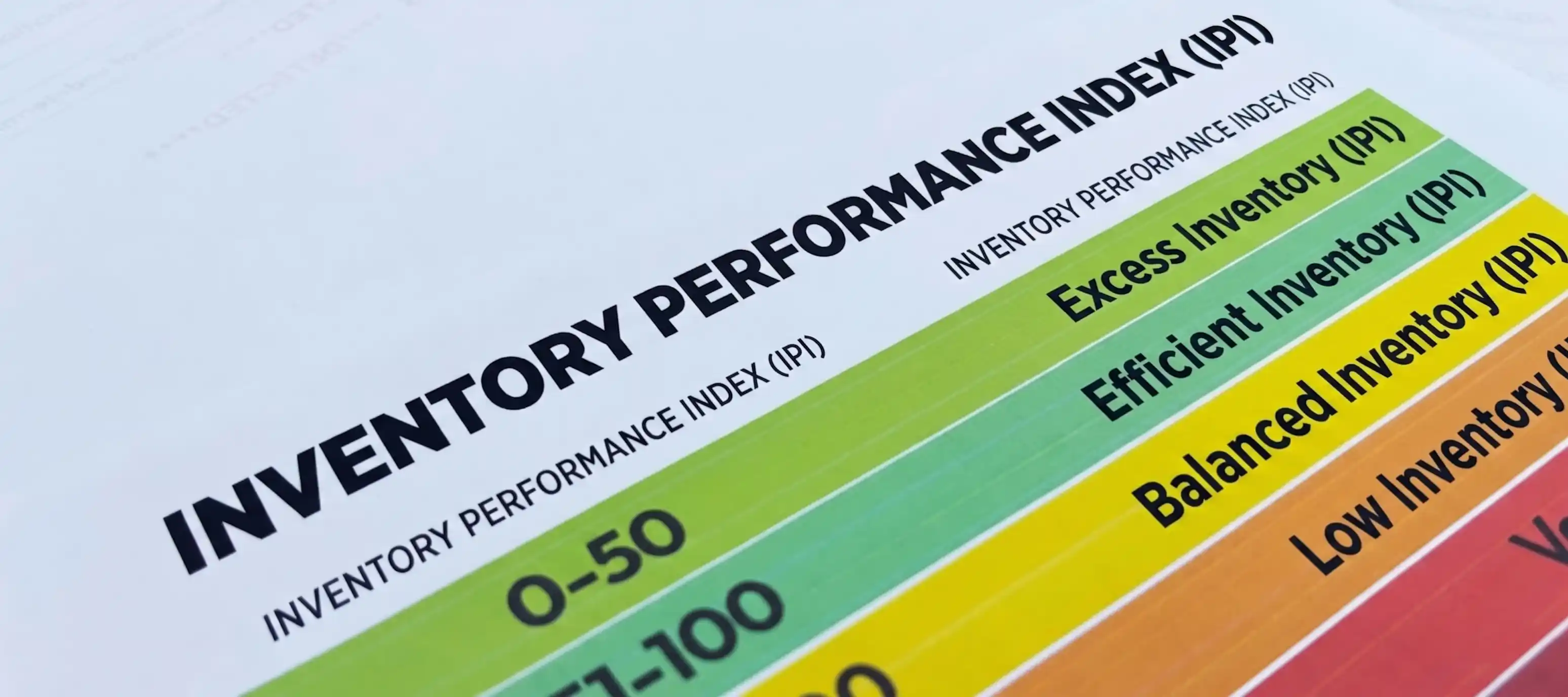
When auto-replenishment is working correctly, your FBA in-stock rate improves. You're less likely to run out of stock on fast-moving SKUs because AWD is continuously topping off your FBA levels. A higher in-stock rate is one of the factors Amazon uses in IPI scoring, so a well-managed AWD setup can lift your score over time.
On the other side: if you're using AWD and your FBA levels are consistently too high — because you set your auto-replenishment maximum too aggressively — you can end up with excess inventory flags in FBA, which hurts IPI. AWD doesn't cause this on its own, but it's easy to miscalibrate if you set the maximum replenishment limits without checking your sell-through rate first.
The cleaner way to think about it: AWD doesn't improve your IPI score by existing. It improves your IPI score by keeping FBA inventory lean and in-stock simultaneously — which is exactly what the IPI formula rewards. Get that balance wrong and AWD can work against you.
Why AWD Makes Particular Sense Right Now
There are two specific reasons AWD is worth more attention now than it was a couple of years ago, both tied to Amazon's own policy changes.
The first is the inbound placement fee. Amazon introduced placement fees in 2024, charging sellers who send inventory to a single fulfillment center rather than distributing it themselves across Amazon's network. For high-volume SKUs, these fees add up quickly. Sellers who use AWD and meet certain criteria can qualify for a placement fee exemption — Amazon handles the distribution from AWD to the appropriate FBA centers, and you're not charged for the privilege. That's a real cost offset that changes the AWD economics significantly.
The second is Q4 capacity management. Every year, sellers run into the same wall: Amazon tightens FBA inventory limits during peak season, precisely when you want more stock on hand. AWD inventory doesn't count against your FBA capacity limits. You can hold more total inventory in the Amazon ecosystem by parking buffer stock in AWD rather than trying to force everything into FBA during October and November.
For any seller doing meaningful Q4 volume, this alone can justify testing AWD as a seasonal overflow strategy even if you don't use it year-round.
How the Auto-Replenishment Algorithm Works
One of AWD's more frequently misunderstood features is its automatic replenishment. The documentation makes it sound straightforward — AWD monitors your FBA levels and sends inventory when needed. But the mechanics matter if you're going to rely on this for a real operation.
The algorithm doesn't simply count days of inventory remaining and trigger a replenishment when you hit a fixed threshold. According to Amazon, it factors in historical sales velocity at the SKU level — meaning it's trying to anticipate demand, not just react to low stock numbers. If a SKU has shown a pattern of acceleration (say, a seasonal product building toward peak), the system should, in theory, replenish earlier than a flat-velocity SKU would require.
There are important caveats to keep in mind:
- The algorithm takes time to learn your SKU's pattern. Newly enrolled products or products with irregular velocity may not be replenished as intelligently as mature, stable SKUs.
- Manual overrides are possible but limited. You can influence replenishment by adjusting your minimum and maximum FBA inventory targets in Seller Central, which sets the guardrails the algorithm works within. What you can't do is trigger an ad-hoc shipment from AWD to FBA on demand the way you would with a 3PL.
- Lead times from AWD to FBA are typically 1–5 business days, but this varies by location and season. During Q4, that lead time can stretch. If the algorithm triggers replenishment late, you can go out of stock before new inventory arrives — and AWD doesn't offer an expedited option.
AWD's auto-replenishment is a useful tool, not a guarantee. It works best when your sales velocity is relatively consistent and your FBA minimum levels are set conservatively. Treat it as a reliable system with a margin of error built in.
Operational Pitfalls Worth Knowing Before You Start
Lead Time Is a Real Risk
The transfer time from AWD to FBA is longer than most sellers initially assume — especially if you're coming from a 3PL where you control when inventory ships to Amazon. With AWD, Amazon controls that timing. A 3–5 day transfer window sounds manageable until you're running at 8 days of cover and the algorithm hasn't triggered yet. Build conservative buffers into your FBA minimums, particularly for fast-moving SKUs or during any period where you expect velocity spikes.
Labeling and Barcoding: No Second Chances
AWD performs bulk receipt. That means when your pallet arrives, Amazon isn't opening boxes and inspecting individual units — they're counting cartons, scanning master barcodes, and moving on. If a carton has incorrect labeling, a missing barcode, or units that weren't properly prepped, those problems don't get caught and corrected at the AWD stage. They either cause receiving errors or, worse, they make it through to FBA where they cause listing issues or stranded inventory.
Your labeling, carton pack configurations, and barcodes must be completely correct before they leave your supplier or prep facility. A 3PL can catch errors before they ship to Amazon; AWD cannot.

AWD Doesn't Open Your Boxes
Amazon's AWD facilities accept inventory at the case/carton level. They do not inspect individual units, check product quality, verify counts per inner carton, or confirm that items inside match what the outer label says. That's not a criticism — it's how bulk warehousing works — but it means the quality control responsibility sits entirely with you.
If you're sourcing from a manufacturer in China or Turkey and shipping directly to AWD without routing through a quality inspection or prep service, any factory errors — wrong count per case, incorrect variant packed, surface damage — will not be caught until those units are already inside the FBA network. By then, you're looking at removal orders, customer complaints, and potential listing penalties. The cost of a third-party inspection before your goods reach AWD is almost always less than the cost of dealing with the fallout after.
Direct-to-AWD shipping from overseas is possible and cost-effective. Just don't confuse "Amazon receives it" with "Amazon verified it."
Is AWD Right for Your Operation?
AWD isn't a universal upgrade. It's a specific tool that solves specific problems — primarily high FBA storage costs on slow-moving buffer stock, inbound placement fees, and Q4 capacity constraints. If those problems are costing you money right now, AWD deserves serious evaluation.
If you have products that need prep, inspection, or lot-level tracking before reaching FBA, you're not ready to cut your 3PL out of the equation. AWD and a 3PL aren't mutually exclusive either — some sellers use a prep center for quality control and labeling, then ship finished cartons to AWD for storage before FBA replenishment. That hybrid approach keeps the quality control layer while capturing AWD's cost and capacity advantages.
What AWD is not: a set-and-forget system. The auto-replenishment is useful but imperfect. The quality control gap is real. The lead times require buffer planning. Model your actual unit economics against what you're currently paying, and test it on a subset of your catalog before committing wholesale. That's how a decision like this should be made.